
ሰላም!
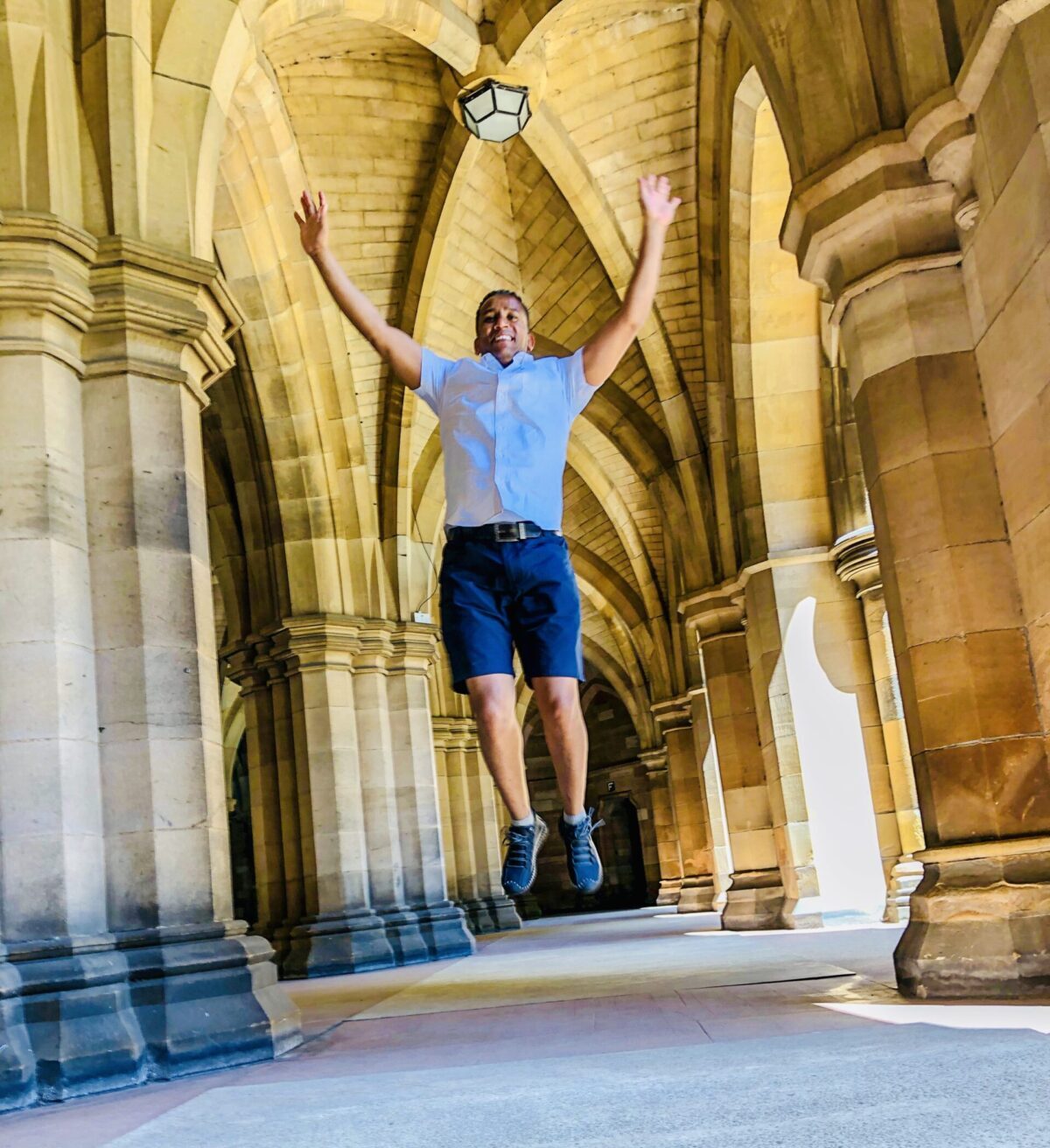
I am a Lecturer in Forced Migration and Decolonial Education with the UNESCO Chair RIELA at the University of Glasgow. My work inhabits the threshold between political theory, decolonial thought, poetics, and peace studies, asking how we might think and live otherwise in a world trembling with violence.
Research, for me, begins where language falters and bodies tremble. It begins in the spaces where bodies have crossed necropolitical borders, where displaced voices have survived their own disappearance, and where ordinary life no longer exists. My scholarship is less an attempt to explain forced displacement than an effort to remain intellectually and ethically answerable to what the refugee abyss leaves behind and to what, against every expectation, it makes possible.
My work moves across theory, empirical research, and policy engagement, developing conceptual orientations that seek not merely to interpret the world but to unsettle the categories through which it has become intelligible. I recently co-edited the Journal of Language and Intercultural Communication special issue on Intercultural Knowledge Production and the volume Cultures of Sustainable Peace, published by Multilingual Matters. My monograph, The Refugee Abyss, advances a poetic account of forced displacement that rethinks poetics of refuge, political possibilities, and acentric relationality through the lives of those who continue to inhabit the refugee abyss.
My research interests unfold through three interconnected strands.
1. Naming the abyss
Naming the Abyss develops conceptual and empirical language for the existential, political, and onto-epistemic conditions produced by forced displacement, attending to what exceeds prevailing categories of refuge, citizenship, and humanity.
2. Inoperative resistance
Inoperative resistance examines how violent epistemic and political orders may be rendered inoperative rather than merely opposed. Beyond concealment or refusal, it explores opacity as an ethical and political practice that suspends the demand for transparency, exposing the absurdity of nakedness before power while deactivating the mechanisms through which life is made legible, governable, and violable. In this movement, resistance emerges not through opposition alone but through the destitution of violence itself, preserving irreducibility without foreclosing encounter and allowing dignity, knowledge, and coexistence to appear beyond capture or translation.
3. Relation
Relation advances a relational ontology of being in common, reimagining peacebuilding and political life through reciprocity, mutual obligation, and respect for opacity against totalising notions of sameness and universality.
Across these strands, my work seeks to reorient forced migration studies, political theory, and peace studies beyond necropolitical governance towards justice, relational knowledge, and relational ways of inhabiting the world together.
Beneath these conceptual concerns lies an unseen gravity. My academic journey did not begin from institutional security or inherited privilege, but through the difficult work of survival. Before entering the university, I had already learned that the body can become an archive of necropolitical violence, that speech can be be simultaneously hypervisible and unheard, and that exile neither begins nor ends at the border. There are absences that no citizenship or assimilative notion of integration can repair. There are hands never held again, graves never visited, and names carried forward only through memory. These histories are neither the object nor the justification of my scholarship. They are the poetic threads from which my thinking has become possible. Some of these threads are explored more personally in my autobiographical reflection.
For this reason, I understand research as an ethical practice before it is an intellectual one. Writing is, for me, a form of breathing with others. It is a way of remaining in relation to lives that institutions, archives, and histories too often render disposable. Every programme of work bears the traces of collective care. It carries the generosity of those who made my own improbable journey possible, the companionship of colleagues, students, friends, and communities who continue to sustain my work, and the memory of those whose lives were interrupted before their stories could be fully told.
I remain profoundly grateful to the University of Glasgow for providing the intellectual and institutional space within which this work has been pursued with dignity and purpose, and to the colleagues, mentors, students, friends, and the wider university community whose trust has made scholarship a shared endeavour.
Every reflection I write carries the imprint of lives that continue to exceed representation. Our displaced voices, together with the many others who remain unnamed, absent, or lost, continue to accompany my work. If my scholarship has a single aspiration, it is to honour the humanity that refuses erasure, allowing loss and survival alike to become not merely objects of research but the conditions from which just, relational, and peaceful futures may yet be imagined.